Home/News/Rohit Sharma's 2027 ODI World Cup place: a procedural read of the 5 August 2026 Dainik Jagran report before the September BCCI AGM
Selection Watch13 min read
Rohit Sharma's 2027 ODI World Cup place: a procedural read of the 5 August 2026 Dainik Jagran report before the September BCCI AGM
A Dainik Jagran report that surfaced on 5 August 2026 framed India's national selectors as wanting Rohit Sharma removed from the 2027 ODI World Cup plans and several of them as feeling "betrayed" by the BCCI's public backing two days earlier. Read against the September BCCI AGM, the piece is less a verdict on Rohit and more a procedural document that pins the disagreement to a specific calendar week.
Editorial Notice: This is a procedural read of a 5 August 2026 Hindustan Times / Dainik Jagran report. Selector, board and squad positions discussed below are reported views as published, not confirmed Cricket Team Fantasy announcements.
A Dainik Jagran report dated 5 August 2026 surfaced with a single procedural claim: India's national cricket selectors want Rohit Sharma taken out of the 2027 ODI World Cup plans, and several of them felt "betrayed" by the BCCI's public endorsement two days before the deciding ODI against England at Lord's. The Hindustan Times carried the claim two days later. Read together, the cleanest way to file the report is as an inventory of positions pinned to a specific calendar week, with the next fixed point on that calendar being the BCCI's Annual General Meeting in September 2026.
The sequence that produced the report is short and well documented. Rohit Sharma had scored 11 and 26 in the opening two ODIs of India's three-match series against England the previous month. Media reports that followed the second ODI framed the Lord's finale as a possible farewell appearance. Two days before that game, BCCI secretary Devajit Saikia publicly dismissed the retirement talk and said the senior batter remained part of India's plans. Rohit then scored 138 at Lord's, becoming the first Indian to register an ODI century at the ground and the oldest Indian to score a hundred in international cricket. The Dainik Jagran write-up that followed on 5 August quoted selectors, anonymously, as feeling the board's public endorsement cut across their own assessment that India cannot win the 2027 World Cup with Rohit in the side.
The right read of those facts is not whether Rohit should be in the 2027 squad. The published evidence does not support that level of certainty. The right read is what the report says about how India's white-ball cycle is being sequenced between now and the squad cut-off for the 2027 tournament. This procedural read walks through the verified facts as published, separates the board's position from the selection committee's reported view, fixes the published records that travel with the cycle regardless of who wins the argument, and ends with the September AGM as the next verifiable date on the calendar.
Reading the 5 August 2026 Dainik Jagran report as a cycle-clock document, not a verdict
A clean procedural read starts with what the report is. It is a written inventory of three things: a selector-committee view on Rohit Sharma's ODI place in the 2027 World Cup cycle, a board position articulated publicly two days before the deciding ODI, and a procedural note that the chief selector's role and the squad direction will be revisited at the September BCCI AGM. It is not a selection decision. It does not name individual selectors. It does not claim a board ruling. It does not pre-empt the AGM. The piece's value to readers is therefore not as a verdict on Rohit but as a document that pins the disagreement to a specific calendar week and to a specific set of named officials.
Read that way, the report's structural function is clearer than its surface claim. The surface claim is "selectors want Rohit out of 2027 World Cup plans". The structural function is to put a published date on a disagreement between two bodies that operate on different clocks. The selection committee chaired by Ajit Agarkar works on a daily squad rhythm: pick the XI, run the series, move to the next tour. The board works on a cycle rhythm: set the strategic direction at the AGM, ratify the next chief selector, give the structural framing that lets daily squad calls add up to a coherent tournament build-up. The 5 August report is best read as the moment the cycle rhythm collided with the daily rhythm and both became visible in public.
A second procedural read comes from the timing. The Dainik Jagran piece surfaced roughly two weeks after the Lord's ODI. The Hindustan Times pickup landed two days after that. India's two-Test series against Sri Lanka opened on 14 August 2026, and the September BCCI AGM is named in the report as the venue where the chief selector decision will be revisited. Between the publication date and the AGM sits roughly six weeks of bilateral cricket plus one Test series result, which is the published horizon on which the procedural question actually resolves.
The pre-Lord's denial as the trigger that surfaced the selector-board gap in public
The trigger named in the Dainik Jagran report is the BCCI secretary's public comment two days before the Lord's ODI. Devajit Saikia dismissed the retirement speculation and said Rohit Sharma remained part of India's plans. A statement from the secretary's office is a high-level intervention in selection conversation in Indian cricket. It does not formally bind the selection committee, but it changes the political weight behind any squad decision involving the senior batter. The published complaint from selectors is best read against that timing: a public endorsement landed before the deciding ODI, which made the selection conversation about rotation harder to carry on in public even if it remained live inside the committee room.
That timing also explains the depth of the "betrayed" framing in the Dainik Jagran piece. The selectors were already working from an internal assessment that the team cannot win the 2027 World Cup with Rohit in the side, per the report. The board's public framing two days before the deciding ODI moved the conversation out of the committee room and into a press cycle. Once a position is on the public record, rotating a senior batter out of a bilateral series carries a different political cost than it would have inside a closed-door meeting. The selectors' published reaction reads as a complaint about that cost being imposed without their input, not as a complaint about the 138 itself.
The pre-Lord's statement is also the part of the published record that readers who only track the cricket side are most likely to miss. The Lord's 138 is the louder headline. The pre-Lord's statement is the quieter one, and it is the part that explains why the disagreement surfaced in a written report rather than in a quiet post-series press conference. The two are linked, but only the second one explains the timing of the 5 August publication.
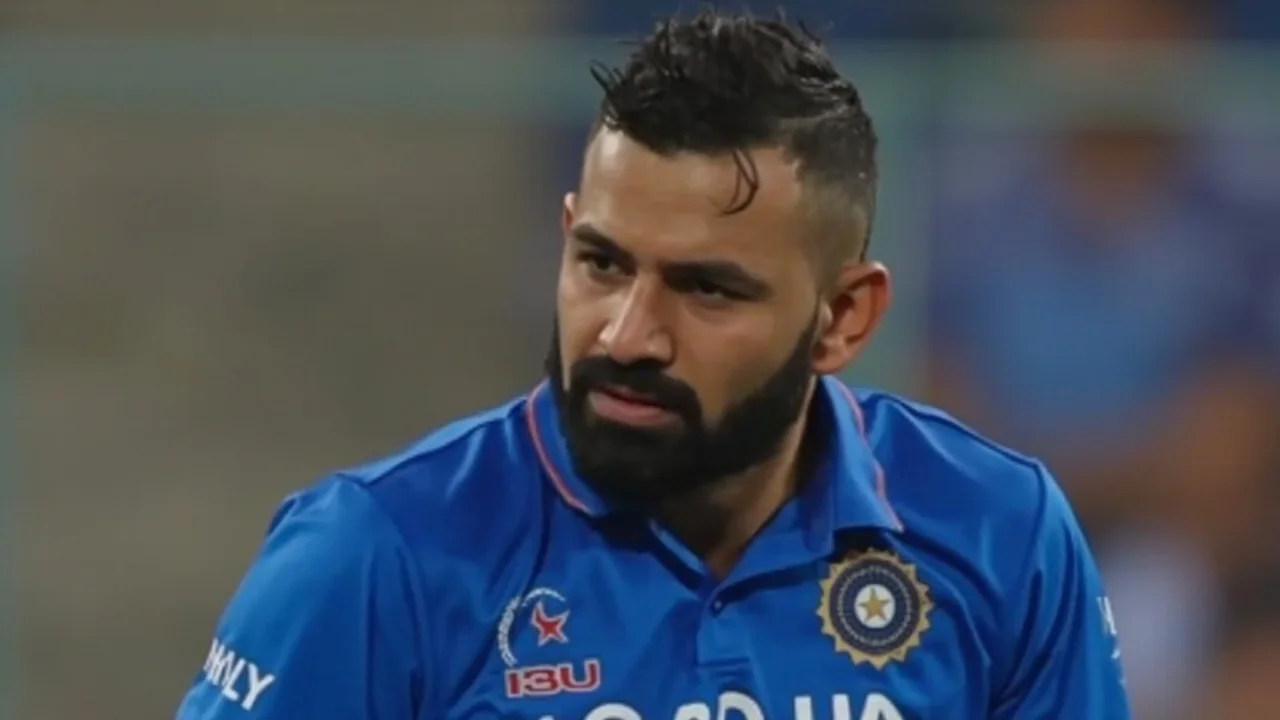
The Lord's 138: 143 balls, two records, and the centre of the 5 August 2026 published disagreement.
How the published piece apportions attribution: selectors anonymous, board on the record
The apportionment of attribution inside the Dainik Jagran piece matters for any honest read. The selector-committee view is attributed to "several selectors" without naming any individual. The board's view is attributed by name, through the secretary's pre-Lord's public comment and through the institutional weight of the BCCI's office. That asymmetry is unusual in Indian cricket reporting. Most published selector-board disagreements in the past have either been attributed to individual selectors by name or have stayed entirely off the record.
The asymmetry tells the reader two things. First, the selectors were willing to put a collective view on the public record but not to attach individual names to it. That is a signal of how confident the committee room was in the assessment and how cautious individual selectors were about being associated with it in print. Second, the board was willing to put a position on the public record two days before a deciding ODI, which is itself a signal of how important the BCCI leadership judged the framing of Rohit's ODI future to be.
Read against the chief selector's procedural situation, the asymmetry also suggests the publication landed during a window in which the committee room felt its view was being closed out of the public framing. A selection committee that felt it could carry the disagreement internally would not have needed a written report. A selection committee that felt its view had been publicly contradicted before the deciding ODI had a reason to file its position somewhere visible. The 5 August publication is best read as the committee room's reply to a public framing it did not control, not as a long-planned leak timed for maximum disruption.
The Lord's 138, the two records it set, and what those records do and do not decide
Rohit Sharma's 138 at Lord's set two specific records. He became the first Indian batter to score an ODI century at the venue, joining a venue ledger that has tracked visiting ODI hundreds since the 1970s. He became the oldest Indian to register a hundred in international cricket, a longevity record that reads as a workload and conditioning story rather than as a single-innings verdict. Both records are public, both are verifiable, and both travel with the player's career file regardless of what the September AGM decides.
What the records do not decide is the cycle question. A century at a Test ground that has hosted Indian cricket for a century is a public record, not a procedural answer. The selectors' reported position is about how the ODI cycle should be sequenced between now and the squad cut-off for the 2027 World Cup. The Lord's 138 adds one entry to that sequence. It does not change the sequencing question itself. The board's framing treats the 138 as evidence that the senior batter remains central to the cycle. The selectors' framing treats the 138 as a data point inside a sequence that still needs to hand innings to the batters who will be in their late twenties when the 2027 tournament lands.
A clean read of the public evidence is that the Lord's 138 changed the short-term conversation but did not close the cycle question. It raised the political cost of a rotation call for the next bilateral series. It did not change the structural sequencing problem the selectors reported. That asymmetry between a loud public record and a quieter structural question is the most useful thing the 5 August report tells a reader who tracks India cricket weekly.
Why "cannot win the 2027 World Cup with Rohit in the side" is a sequencing claim, not a form claim
The selectors' reported assessment, as published, is that the team cannot win the 2027 World Cup with Rohit Sharma in the side. That sentence sounds like a form judgment until it is read against the cycle context. It is a sequencing claim. The selectors' published argument is that India's 2027 build-up is being asked to absorb too much senior carry and not enough transition, and that delaying the handover of ODI innings to the batters who will still be in their late twenties when the tournament lands in late 2027 costs India optionality at the squad cut-off.
Read that way, the assessment is not about whether Rohit is in form. The Lord's 138 settled the form question for the public. The assessment is about whether the ODI cycle gives the next layer of batters enough innings under World Cup-style pressure to be picked with confidence at the squad cut-off. That is a sequencing question that turns on workload distribution across the next 18 months of bilateral cricket, not on the result of any single ODI.
The board's framing treats the question differently. Through the secretary's public statement, the board framed Rohit as part of India's plans and the 138 as evidence that the senior batter is performing at the level the cycle needs. Read against the sequencing claim, that is a different argument about what the cycle needs. Both arguments are coherent on their own. The published disagreement is over which argument sets the operational ceiling for the next 18 months, not over whether the Lord's 138 was a good innings.
The 18-month bilateral calendar between now and the squad cut-off for the 2027 tournament
The 2027 ODI World Cup is scheduled for southern Africa in October and November 2027, which is the structural anchor for every selection conversation between the 5 August 2026 publication and the squad announcement. The published horizon between the report and the tournament compresses around 18 months of bilateral cricket, plus the Asia Cup windows, plus the squad cut-off itself. The selectors' complaint, in the report, is about how that calendar is being divided between senior carry and transition innings.
The arithmetic of that calendar is the most useful framing for readers. A 50-over World Cup cycle runs roughly 18 to 24 months of bilateral cricket before the squad is finalised. India's ODI calendar in that window includes home and away series against the major Full Members, the Asia Cup, and the bilateral windows reserved for the World Cup build-up. Each of those windows is a fixed number of ODI innings that has to be distributed across a squad of around 18 to 20 players before the final 15 is named.
The selectors' published argument reads cleanest against that arithmetic. If senior batters carry the bulk of ODI innings through 2026 and the first half of 2027, the younger batters do not get the World Cup-style exposure they need to be picked with confidence at the cut-off. If the senior batters are rotated more aggressively through bilateral cricket, the team risks a series loss that the board would not tolerate. The 5 August report is a snapshot of that trade-off leaning one way inside the selection committee room and a different way inside the board.
The selection conversation that the 5 August 2026 report describes plays out at the boundary edge, but the verdict sits with the September BCCI AGM.
The September BCCI AGM as the only procedural venue where the two published positions can converge
The September BCCI AGM is the next fixed point on the calendar, and it is the only venue named in the 5 August report where the two published positions can converge into a single decision. The Dainik Jagran piece named two AGM-bound items. The first is the chief selector's role: the report said the BCCI is considering appointing former India batter VVS Laxman, currently head of the Centre of Excellence in Bengaluru, as the next chief selector in place of Ajit Agarkar, with the final decision expected at the September AGM. The second is Agarkar's future, which the report framed as potentially hinging on India's performance in the upcoming two-Test series against Sri Lanka.
For readers who track Indian cricket, the AGM is the most consequential fixed point between the 5 August publication and the 2027 squad announcement. Any further public comment from the board before the AGM is best read as positioning rather than decision. Any squad rotation in the bilateral windows before the AGM is best read as the selectors testing the boundaries of the public endorsement through selection calls rather than through press comment. The 5 August report is best read as a snapshot of the gap, not as a verdict on who wins it.
The historical pattern in Indian cricket is that senior-batter workload questions resolve through board-level endorsement rather than through selection-committee debate alone. The selectors carry the daily squad calls. The board carries the structural framing that lets the daily calls add up to a coherent World Cup cycle. The 5 August piece is unusual only in that the disagreement between the two bodies became visible in public before the AGM could reconcile it. The publication does not change the rules of who decides what. It changes the political temperature inside the room.
What the two-Test series against Sri Lanka can and cannot settle before the AGM
The Dainik Jagran report named India's upcoming two-Test series against Sri Lanka as the trigger for the chief selector's verdict. The series opened on 14 August 2026 at Galle and runs through the second Test at a venue to be confirmed. A clean read of what the series can settle separates the ODI question from the Test question, because the two are different competitions against different opponents on different surfaces.
On the ODI question, the series settles nothing directly. Sri Lanka are not the opponent in the ODI cycle that the selectors' sequencing argument is built around. The selectors' published view is about the 2027 World Cup build-up, which is an ODI competition. A Test result against Sri Lanka can shift the political weight behind the chief selector's future without changing the ODI sequencing question at all.
On the chief selector's chair, the series does have a published role. A dominant scoreline keeps the board's read of the senior team's trajectory consistent with the public framing of senior players. A defeat or a drawn series would push the board closer to the selectors' framing and would raise the probability of a chief selector change at the AGM. As of the date this read is filed, the trigger remains active through the second Test. The published evidence does not yet carry a verified result.
A second-order procedural point matters here. The selectors' published argument is about ODI sequencing, but the trigger named in the report is a Test series result. The asymmetry between the trigger (a Test series) and the substantive question (an ODI cycle) is itself part of the published record. It tells the reader that the AGM verdict will be shaped by what the board sees in the Test side at least as much as by what the selectors have published about the ODI side.
A short inventory of facts that carry forward regardless of the AGM verdict
Four facts in the 5 August report travel forward regardless of what the September AGM decides. The first is the 138 at Lord's and the two records attached to it: the first Indian ODI century at the venue, and the oldest Indian to register an international hundred. Both stay on the public record. The second is the BCCI secretary's pre-Lord's public statement framing Rohit Sharma as part of India's plans, which stays on the public record and which the selectors' published reaction was filed against.
The third is the selectors' published assessment that the team cannot win the 2027 World Cup with Rohit in the side. The Dainik Jagran piece attributes that view to "several selectors" without naming any individual. The published view stays on the public record, attributed to the selection committee rather than to any selector by name. The fourth is the VVS Laxman candidacy itself. The Dainik Jagran report named Laxman as the leading candidate to replace Agarkar as chief selector, with the final decision expected at the September AGM. The candidacy stays as a reported candidate, not a confirmed appointment, until the AGM ratifies or rejects it.
For readers who track the India players desk weekly, that four-fact inventory is the cleanest thing to carry into the AGM. The cycle question is settled by the AGM verdict. The published view is not retracted. The two records set at Lord's travel with the senior batter's career file. The candidacy named in the report stays as a candidacy until the AGM rules on it. Reading the four in order is the most disciplined way to keep track of the 2026-27 ODI cycle between the 5 August publication and the September meeting.
For the broader India players desk, the 5 August 2026 report is a reminder that World Cup cycles turn on the cycle's structural decisions, not on the most recent innings. The Lord's 138 is part of the record. The Dainik Jagran report is part of the record. The AGM verdict is the next part of the record. Reading the three in order is the cleanest way to understand where India's ODI side actually stands between August 2026 and the 2027 squad announcement.
Reader questions on the cycle, the chief selector's chair and the September verdict
Q: What did the 5 August 2026 Dainik Jagran report actually say?
A: A Dainik Jagran report dated 5 August 2026, carried by Hindustan Times two days later, attributed a collective view to India's national selectors that Rohit Sharma should be taken out of the 2027 ODI World Cup plans and that several of them felt "betrayed" after the BCCI's public backing two days before the Lord's ODI.
Q: Why is the BCCI secretary's pre-Lord's statement treated as the trigger?
A: BCCI secretary Devajit Saikia publicly dismissed the retirement speculation two days before the Lord's ODI, framing Rohit as part of India's plans. The selectors' published "betrayed" reaction is best read against that timing: a public endorsement from the secretary's office carried a political weight that closed the rotation conversation in the news cycle even if it stayed open inside the committee room.
Q: Which records did Rohit Sharma set at Lord's?
A: Rohit scored 138 at Lord's, becoming the first Indian batter to register an ODI century at the venue and the oldest Indian to score a hundred in international cricket. Both records stay on the public record regardless of what the September AGM decides.
Q: Why is VVS Laxman named in the report?
A: The Dainik Jagran piece named former India batter VVS Laxman, currently head of the Centre of Excellence in Bengaluru, as the leading candidate to replace Ajit Agarkar as chief selector if the chair changes hands at the September BCCI AGM. The candidacy stays as a reported candidate until the AGM rules on it.
Q: When does the chief selector decision happen?
A: The Dainik Jagran report said the final decision on the chief selector's role is expected at the BCCI Annual General Meeting in September 2026, with Ajit Agarkar's future potentially hinging on India's performance in the two-Test series against Sri Lanka that opened on 14 August 2026.
Q: Does the Dainik Jagran piece name individual selectors?
A: No. The report attributes the selection-committee view to "several selectors" without naming any individual. The board's position is named through the BCCI secretary Devajit Saikia's pre-Lord's public comment and through the institutional weight of the board office.
Q: Is the September AGM the next fixed point?
A: Yes. The BCCI Annual General Meeting in September 2026 is named in the Dainik Jagran report as the venue where the chief selector question and the squad direction will be revisited. The squad cut-off for the 2027 ODI World Cup follows several months after the AGM and is the next fixed point after that.
A retrospective look at the 14 August CricTrends Galle brief: predicted XIs, sporty-then-spinning pitch note, win-probability split, KL Rahul as captain and Dinesh Chandimal as vice-captain.